
Renovation vs New Construction: Which Fits?
Renovation vs new construction comes down to budget, site limits, timing, and goals. Learn how to choose a project path with confidence and clarity now.
A property can have the right address, the right neighborhood, and years of memories behind it, yet still no longer work for the people using it. That is where the renovation vs new construction decision becomes personal as well as practical. One path preserves what is valuable and improves what is not. The other creates a building around your needs from the ground up.
Neither option is automatically better. The right choice depends on the condition of the property, the scope of your goals, local requirements, your budget tolerance, and how much uncertainty you are prepared to manage. A clear early assessment can prevent a project from becoming more expensive, more disruptive, or more complicated than it needs to be.
Renovation vs New Construction: Start With the Building
The first question is not whether you prefer a remodel or a new build. It is whether the existing structure is a sound foundation for your plans.
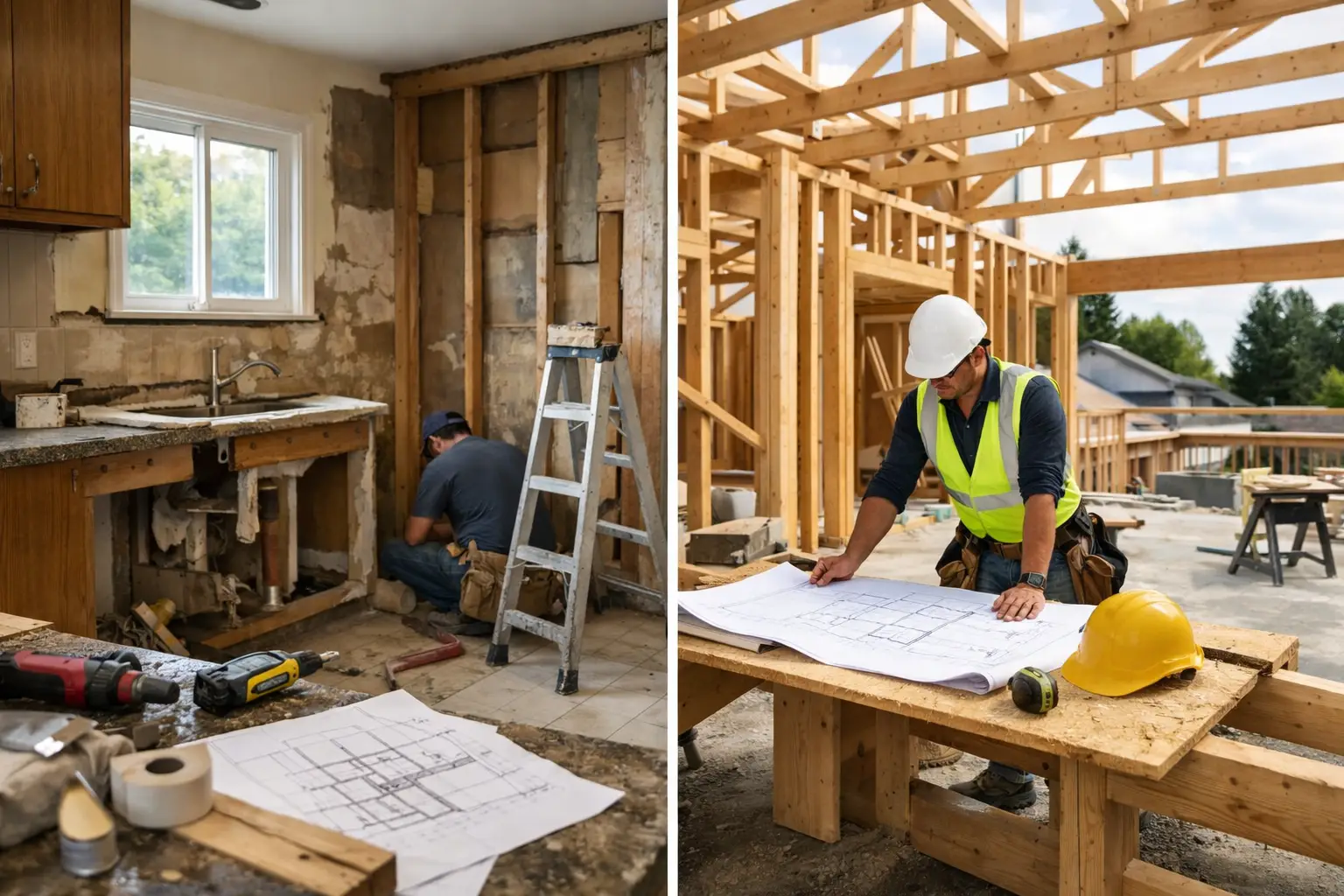
A renovation often makes sense when the home or commercial space has good bones, a workable layout, and systems that can be upgraded without rebuilding everything around them. A well-located home may need a larger kitchen, a finished basement, additional bedrooms, or better energy performance, but its structure and site may still be worth keeping. For a business, an existing unit may offer the right visibility, access, and lease terms while needing only a thoughtful tenant improvement to support operations.
New construction becomes more compelling when major deficiencies affect the foundation, framing, roof, mechanical systems, or overall layout. It may also be the more practical route when the desired changes require extensive demolition, substantial structural alteration, or a complete reworking of the building footprint. At a certain point, trying to preserve an existing structure can cost more than building a new one while delivering fewer long-term benefits.
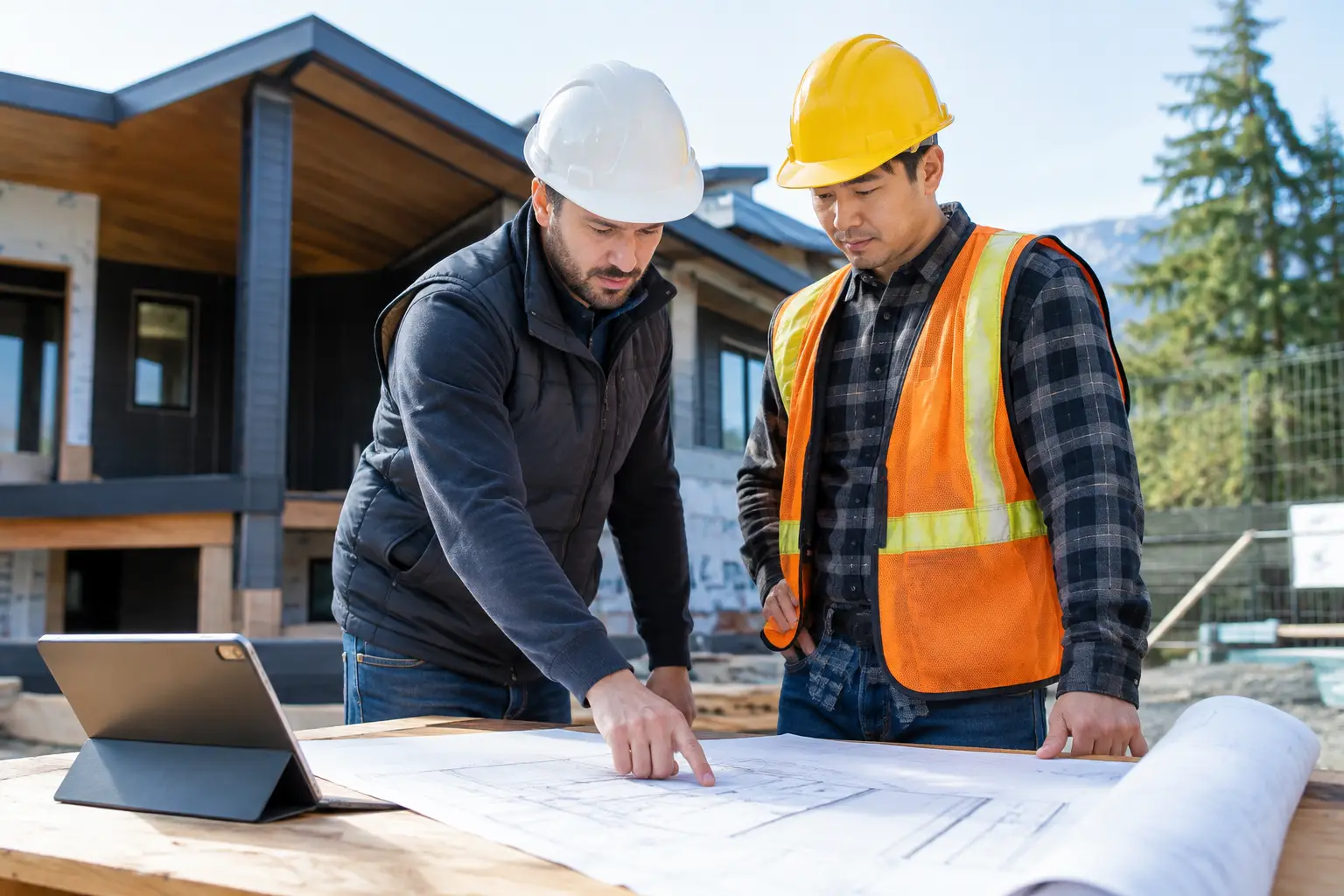
This is why a proper feasibility review matters. Before making a decision based on a rough online estimate or a neighbor’s experience, have the property evaluated for structural condition, site constraints, utility capacity, zoning considerations, and the likely scope of required upgrades.
When Renovation Is the Better Investment
Renovation is often about making a property fit the life or business you already have. It can preserve the character of an older home, keep a family close to schools and neighbors, or allow a business to improve its customer experience without relocating.
For homeowners, a renovation can be especially effective when the issue is function rather than square footage. Reconfiguring an outdated main floor, modernizing a kitchen and bathrooms, converting an underused basement, or improving storage can make a familiar home feel entirely different. A full-home renovation can also bring older electrical, plumbing, insulation, and HVAC systems up to current expectations while improving comfort and operating costs.
For commercial property owners and tenants, renovation can minimize interruption when the building shell, location, and circulation already work. A carefully phased buildout may allow part of a business to remain operational while improvements take place. This requires detailed planning, clear safety controls, and close coordination with trades, suppliers, and building management, but it can be worthwhile when continuity matters.
Renovation also has limits. Opening walls can reveal water damage, outdated wiring, hidden structural changes, or materials that require specialized handling. These conditions are not a reason to avoid renovating, but they are a reason to build appropriate contingencies into the budget and schedule. Honest planning accounts for what can be seen and what may only become clear during demolition.
When New Construction Offers More Control
New construction gives you the greatest control over layout, performance, materials, and future use. Rather than adapting your plans around existing walls, ceiling heights, and old mechanical routes, you can design the building as a coordinated whole.
That flexibility can be valuable for a custom home, laneway home, or commercial building with specific operational requirements. You can plan room sizes around how you actually live, create accessible circulation, position windows for light and privacy, and integrate modern insulation, ventilation, electrical capacity, and smart-home or business technology from the beginning.
A new build can also make costs easier to forecast once design, engineering, permits, and selections are well defined. It is not free from risk. Site conditions, permit timelines, utility coordination, material lead times, and owner-driven changes can still affect the final schedule and budget. But there are generally fewer unknowns inside a structure that has not yet been built.
The trade-off is that new construction can require a longer runway before work begins. Demolition, surveys, design coordination, municipal approvals, financing, and site servicing all need attention. If you are rebuilding on an existing lot, you may also need to arrange temporary housing or plan for a longer period away from the property.
Compare the Real Costs, Not Just the Starting Numbers
The lowest initial estimate does not always represent the better value. Renovation pricing may appear lower because it retains part of the existing building, but the final cost can change if concealed conditions are discovered. New construction may carry a higher upfront cost, yet it can reduce future maintenance needs and provide better efficiency over time.
A useful comparison looks beyond construction alone. Consider design and engineering, permits, demolition, temporary accommodation or business disruption, utility upgrades, site work, furnishings, financing costs, and a realistic contingency. For commercial projects, include lost revenue, temporary operations, and the cost of working around occupied spaces.
It is also worth separating needs from preferences. A homeowner may need a safer electrical system and a functional kitchen, while a high-end appliance package or custom millwork may be a preference. Both can be worthwhile investments, but they should be budgeted intentionally. The same principle applies to commercial projects, where code compliance and operational needs should be secured before optional finishes are expanded.
Timing, Permits, and Daily Disruption
A renovation can sometimes move faster because the structure already exists, particularly for focused projects such as a bathroom, kitchen, basement, or interior tenant improvement. However, renovation schedules can become less predictable when hidden conditions emerge or when work must be sequenced around occupied areas.
New construction generally involves more front-end planning. The design must be coordinated, approvals secured, materials procured, and site preparation completed before the building takes shape. Once work is underway, the construction sequence is often more straightforward because the team is not working around existing finishes and systems.
Daily life deserves equal weight in the decision. Living through a major renovation can be demanding, especially when kitchens, bathrooms, or primary living areas are affected. Running a business through a renovation requires even more careful planning around dust, noise, customer access, and safety. New construction may shift disruption to the planning stage and temporary relocation, while renovation brings the work closer to your current routine.
Questions That Bring the Right Path Into Focus
Before committing to either option, ask what must be true for the project to feel successful five or ten years from now. Do you want to preserve the character and location of the existing property? Is the current structure capable of supporting your plans? Are you prepared for renovation unknowns, or would a more defined new-build scope bring greater peace of mind?
It also helps to review four practical areas early: the condition of the building, the rules governing the site, the full project budget, and the impact on your daily life or operations. These conversations are most useful before drawings are finalized, when changes are still easier and less costly to make.
A dependable contractor-partner should help you examine both routes honestly, not steer you toward the largest project. At Rely Construction, that means beginning with the realities of the property and the priorities behind the investment, then coordinating the planning, pricing, permits, trades, and construction work required to move forward with clarity.
The best choice is the one that respects your vision without asking you to ignore the building, the budget, or the people who will live and work there. With the right assessment and a team that communicates clearly, either path can lead to a space built for what comes next.