
Custom Home Versus Resale: Which Fits You?
Choosing a custom home versus resale means weighing location, timing, cost certainty, and the freedom to build around how your family lives each day.
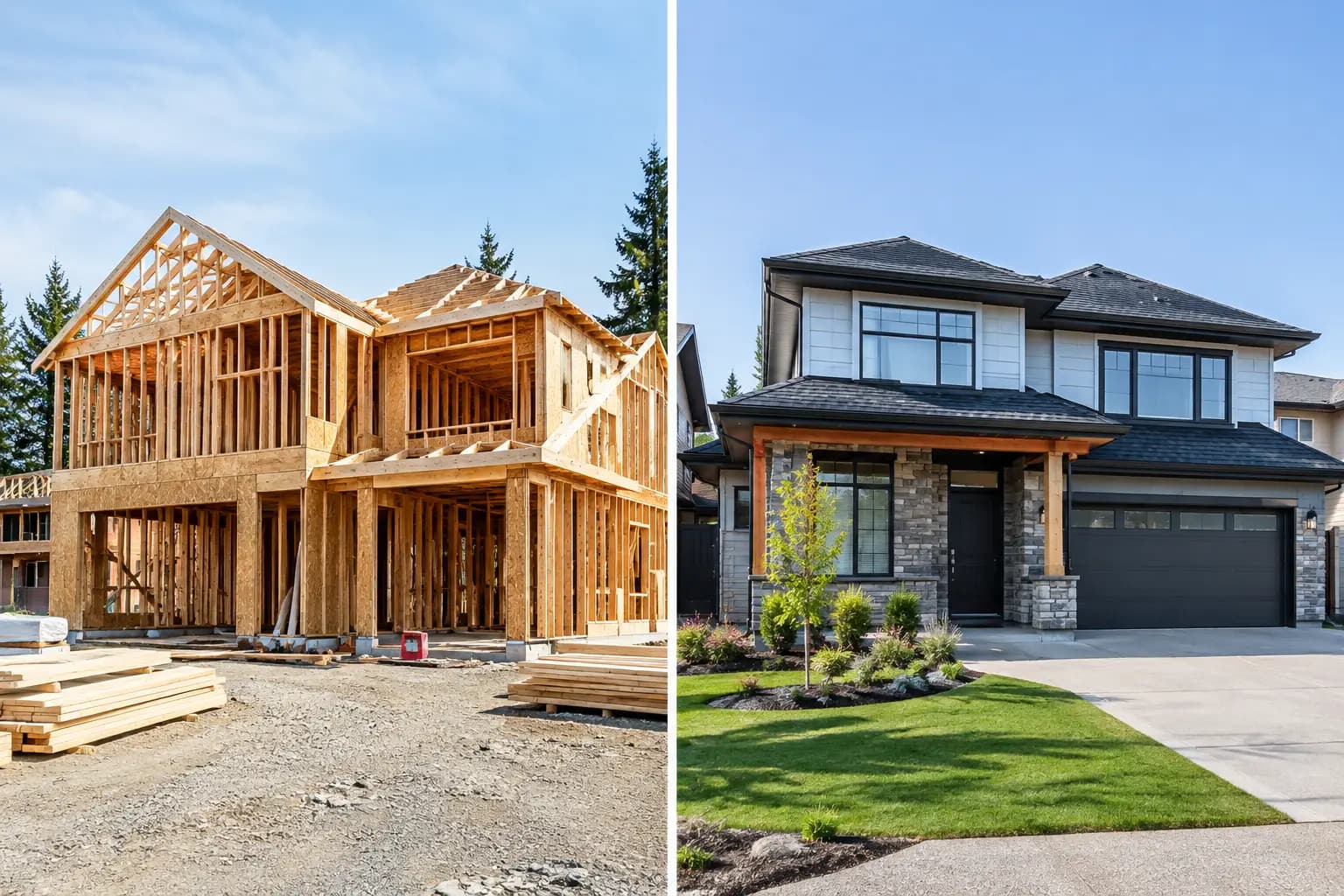
A resale home can feel like the faster path: walk through it, picture your furniture in the rooms, make an offer, and move forward. A custom build asks more of you upfront, but it can give back something a finished home rarely can – a house designed around your life rather than one you need to adapt to. The custom home versus resale decision is not simply about new versus old. It is about priorities, risk tolerance, timing, and what you want your investment to do for you over the long term.
For some buyers, the right resale home is an excellent choice. For others, compromising on layout, storage, energy performance, or future needs becomes expensive and frustrating after move-in. A clear look at both paths helps you make the decision with fewer surprises.
Custom Home Versus Resale: Start With Your Priorities
The strongest reason to build custom is not that every finish must be high-end. It is that the home can be planned around how you actually live. If you work from home, care for aging parents, host large family gatherings, need room for growing children, or want a legal suite or flexible lower level, those needs can shape the design from the beginning.
A resale home may already offer many of those features, particularly in an established neighborhood with a range of housing styles. But buyers often find a near match rather than an exact match. The kitchen may be too small, the primary suite may lack privacy, or the main floor may not work for daily family routines. Those compromises can be perfectly reasonable if the location is right and the home needs only modest updates.
Before comparing listings or sketching floor plans, separate your must-haves from your nice-to-haves. Think beyond countertops and paint colors. Consider the number of parking spaces, natural light, stair placement, storage, accessibility, outdoor living, mechanical systems, and how the house should work five or ten years from now. These are the decisions that carry the most weight.
What a Custom Home Gives You
A custom home provides control where it matters most: the site, layout, performance, and level of finish. You can position rooms for sunlight and privacy, create sightlines that suit the property, and choose materials based on durability as well as appearance. You can also make informed choices about insulation, windows, heating and cooling, electrical capacity, and water management before the walls are closed.
That planning can reduce the urge to renovate shortly after moving in. A well-designed mudroom, pantry, laundry area, or home office may seem less exciting than a statement light fixture, but it changes how the home feels every day. Custom construction also allows you to plan for future changes, such as a first-floor bedroom, an expanded electrical panel, or space for an accessory dwelling unit where permitted.
The trade-off is participation. Building a home involves many decisions, from broad design direction to details that affect budget and schedule. A capable contractor can coordinate the process, provide clear pricing, and keep decisions organized, but the homeowner still needs to be engaged. That is a benefit for clients who want visibility and ownership, and a challenge for those who need to move quickly with minimal involvement.
The Appeal of a Resale Home
A resale purchase offers something custom construction cannot always provide: immediate context. You can see the neighborhood, street activity, mature landscaping, nearby amenities, and the character of the surrounding homes. In established areas, this can be a major advantage. You are not waiting for new trees to grow or wondering how future development will change the block.
The timeline is often shorter as well. Once financing, inspections, and closing are complete, you can move in. That matters when a lease is ending, a job relocation is approaching, or a family needs a home on a firm deadline.
A resale home can also make financial sense when its condition, layout, and location already align with your needs. Not every home needs to be transformed. A property with sound structure, updated systems, and a functional floor plan may require only cosmetic work, allowing you to improve it over time.
Still, a resale price is only the beginning of the cost conversation. Older homes can conceal deferred maintenance behind a fresh coat of paint. Roofs, drainage, electrical systems, plumbing, windows, foundations, and insulation deserve careful attention. Even homes that pass inspection may need meaningful investment sooner than expected. The goal is not to avoid resale homes, but to understand their true condition before treating the purchase price as the full cost.
Compare the Real Costs, Not Just the Price Tag
Custom construction and resale purchases carry different kinds of financial uncertainty. With a resale home, the initial price may be clear, but repair and renovation costs can emerge after closing. With a custom home, the process begins with a broader budget that includes land, design, engineering, permits, site preparation, construction, allowances, and contingency.
The most reliable custom-home budgets are developed early and revisited as design choices become more specific. A foundation on a sloped lot, utility connections, soil conditions, retaining walls, and municipal requirements can significantly affect the final cost. So can decisions about cabinetry, tile, appliances, windows, and specialty details. Transparent budgeting is not about promising that nothing will change. It is about identifying what is known, what remains to be selected, and where allowances or contingencies are needed.
For a resale property that needs work, ask whether the renovation can be completed in phases without creating unnecessary disruption. A kitchen update may be manageable later. Correcting drainage, replacing outdated wiring, or reworking a poorly planned addition may be more urgent and more complex. If the home needs a full renovation to become suitable, compare that total investment against building new or purchasing a different property.
Timing Is More Than the Move-In Date
A resale home can offer speed, but it can also lead to a rushed decision if inventory is limited. Buyers sometimes accept a layout they dislike because they are focused on meeting a closing date. That may be the right call in a competitive market, but it should be a conscious compromise.
Custom construction takes longer because it includes due diligence, design coordination, permitting, procurement, and the build itself. Weather, permit review times, material lead times, and scope changes can influence the schedule. A realistic plan accounts for these variables instead of treating a target completion date as a guarantee.
If you choose to build, begin with feasibility before falling in love with a design. The property must support the home you want, both physically and within local requirements. Early site review and professional coordination can prevent costly redesigns later.
Location Can Decide the Question
For many homeowners, location is the deciding factor. If you want to live near family, schools, work, transit, or a particular community, a resale home may be the most practical route. In some neighborhoods, vacant land is scarce, and teardown or major-renovation opportunities are the only way to create a more tailored home.
A custom home can be especially compelling when you already own land or find a lot with the right setting. It can also make sense when a resale property has strong land value but a house that no longer meets modern needs. In those situations, a new build or substantial reconstruction may offer better long-term functionality than trying to force an outdated structure to do something it was never designed to do.
Choose the Process You Can Support
There is no universally better answer in the custom home versus resale debate. A resale home is often right when location, speed, and a largely functional existing house matter most. A custom build is often right when daily function, long-term performance, and the freedom to shape the home around your family outweigh a longer process.
The best decision is usually the one that leaves room for both your life and your budget. Ask direct questions early, review the full scope of work, and work with professionals who explain trade-offs plainly. A home is a major investment, but it is also the setting for ordinary mornings, busy evenings, and the people you want close. That is worth planning for with care.