
Best Basement Value Improvements for Resale
Plan the best basement value improvements with practical guidance on moisture control, layout, finishes, permits, and choices that support resale appeal.
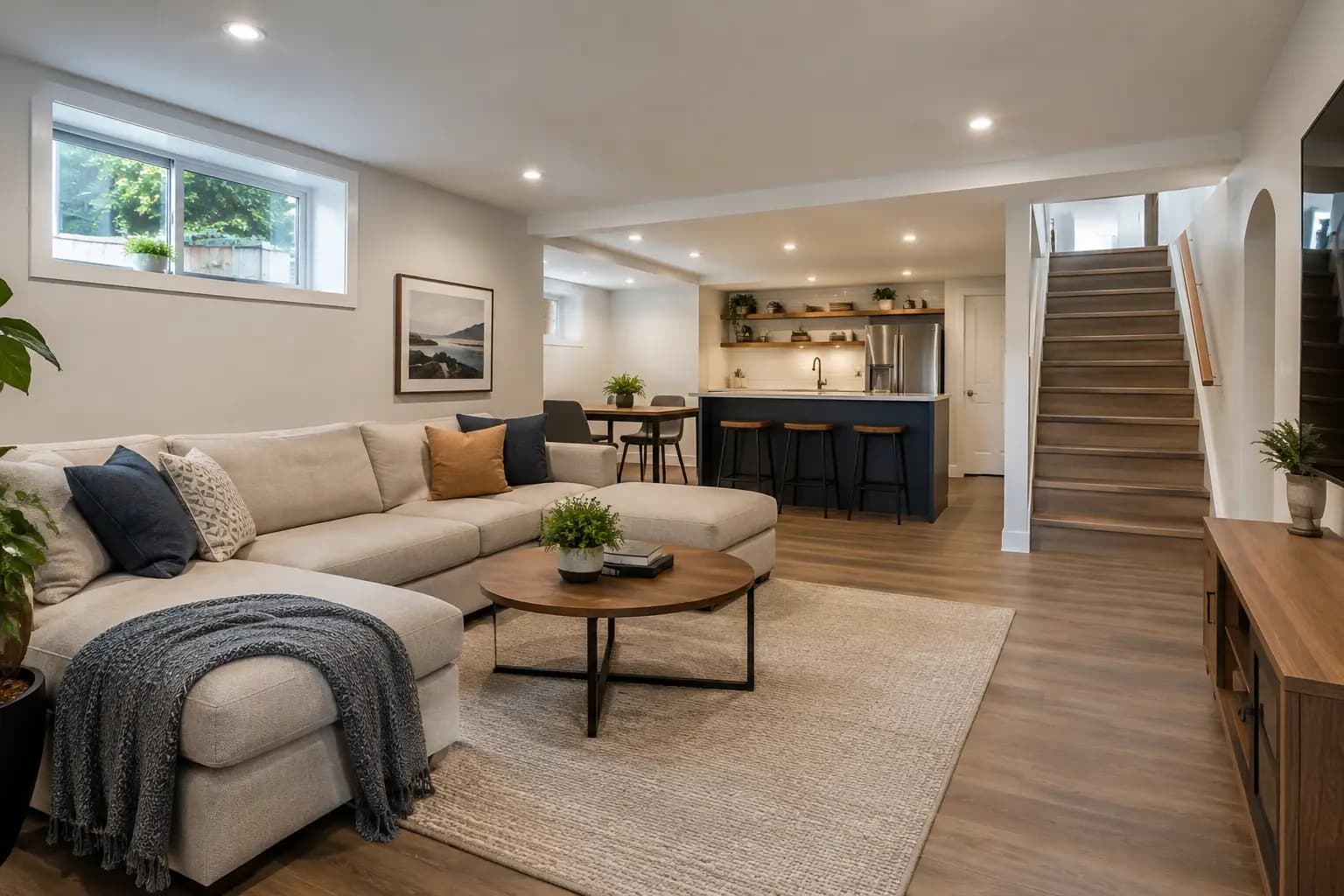
A basement can add meaningful daily living space, but only when it feels like a real part of the home. The best basement value improvements are not always the most elaborate ones. They are the choices that make the space dry, comfortable, safe, flexible, and easy for a future buyer to understand.
For many homeowners, the temptation is to start with finishes: new flooring, a feature wall, perhaps a wet bar. Those details matter, but they cannot compensate for a cold room, a low ceiling, water concerns, or a layout that feels like an afterthought. A well-planned basement renovation protects the home first, then creates useful square footage around how your family lives.
Start With the Conditions Behind the Walls
Before committing to a layout or selecting materials, assess the basement itself. Moisture management, insulation, structural conditions, electrical capacity, plumbing access, and ceiling height all affect what can be built and how long it will last.
Water is the first issue to resolve. A finished basement should never be used to hide foundation leaks, damp walls, or recurring flooding. Depending on the cause, the right solution may involve exterior drainage work, grading adjustments, foundation repairs, interior drainage, sump pump improvements, or replacement window wells. The appropriate scope depends on the property, but addressing the source is more valuable than covering over the symptom.
Insulation and air sealing are equally important. Basements are naturally cooler than the upper floors, and poorly insulated exterior walls can make a new space feel uncomfortable even with upgraded finishes. Proper insulation, vapor control, and heating or cooling planning help prevent condensation and make the basement usable throughout the year.
This stage can feel less exciting than choosing tile or paint, but it is where a basement project earns its value. Buyers may not see every layer behind the drywall, yet they notice the result: rooms that smell clean, feel warm, and show no signs of water damage.
Best Basement Value Improvements Begin With Useful Space
A basement adds the most value when its purpose is immediately clear. Broad, adaptable spaces generally appeal to more households than highly specialized rooms. A comfortable family room, home office, fitness area, guest room, or playroom can serve several types of buyers over time.
Rather than dividing the basement into several undersized rooms, consider the circulation and natural light available. An open main area with one enclosed flex room often provides a better balance than a maze of partitions. The enclosed room can work as an office, hobby room, guest space, or future bedroom if it meets local code requirements.
A true bedroom is not simply a room with a closet. It may require compliant emergency egress, appropriate ceiling height, heating, ventilation, smoke and carbon monoxide alarms, and other code considerations. If the conditions do not support a legal bedroom, it is better to describe and build the room honestly as an office or flex space than to create expectations the property cannot support.
Add a Bathroom When the Layout Supports It
A basement bathroom is often one of the strongest functional upgrades because it makes the level easier to use for guests, teenagers, work-from-home households, and extended family. It can also make a recreation room or guest suite feel complete.
That said, bathroom costs can rise quickly when plumbing must be moved or when a sewage ejector system is needed. The best time to evaluate the option is during planning, before walls and flooring are installed. If a full bathroom stretches the budget too far, a thoughtfully located powder room may still offer meaningful convenience.
The goal is not to add every possible feature. It is to invest where the improvement changes how the home functions.
Prioritize Ceiling Height, Lighting, and Comfort
Basements can feel smaller than their actual square footage when ceilings are low, ducts are exposed, and lighting is limited. These conditions deserve attention early because they shape every design decision that follows.
Where practical, coordinate mechanical systems to preserve headroom in key walking areas. Bulkheads may be unavoidable, but careful planning can place them where they are least intrusive. In some homes, rerouting services or selecting more compact mechanical solutions can improve the finished ceiling line, though the cost needs to be weighed against the available gain.
Lighting has an outsized impact. Recessed lighting, wall sconces, and layered task lighting can make a basement feel welcoming without relying on a single bright fixture in the center of the room. Light-colored walls and ceilings help, while dimmable controls allow the space to shift from a work area to a movie room or family gathering place.
Natural light should be protected wherever possible. Upgrading undersized basement windows, improving window wells, or keeping sightlines open to existing windows can make a significant difference. For a legal bedroom, egress requirements may also make window enlargement necessary. This work must be planned carefully around foundation conditions, drainage, and permits.
Choose Durable Finishes Over Trend-Driven Details
Basement finishes should be selected with the environment in mind. Materials that perform beautifully on an upper floor are not always the right choice below grade.
Water-resistant flooring is usually a sound investment. Luxury vinyl plank, quality tile, and certain engineered flooring systems can offer warmth and durability while handling the risks that come with basement living. If carpet is desired for comfort in a media room or bedroom, choose products and underlayment suited for below-grade use, and avoid installing it where moisture concerns remain unresolved.
For walls, durable painted drywall may be appropriate in a dry, properly insulated basement. In areas with elevated risk or utility access needs, other wall systems may provide better long-term practicality. A contractor can help assess what makes sense for the home rather than applying the same finish package to every project.
Keep permanent design elements broadly appealing. Neutral flooring, practical storage, clean trim work, and quality hardware tend to age better than bold built-ins or themed finishes. Personality can still come through in furnishings, paint, and lighting that are easier to update later.
Build Storage Into the Plan
Storage is one of the most overlooked basement value improvements. Finished basements often lose the utility space homeowners relied on for seasonal items, sports equipment, luggage, and household supplies. When that storage disappears without a replacement plan, the rest of the home can quickly feel more cluttered.
A dedicated mechanical and storage room is often worth preserving, even if it means slightly reducing finished square footage. Consider shelving, closed cabinetry, under-stair storage, or a built-in closet near the main living area. These features help a basement function better every day and give buyers confidence that the home has room for real life.
Access matters as much as capacity. Storage that requires moving furniture or navigating a tight unfinished corner is less useful than storage that is organized, dry, and easy to reach.
Plan for Permits, Safety, and Future Maintenance
A basement renovation is not only an interior design project. It can involve building permits, electrical permits, plumbing permits, structural review, insulation requirements, fire separation, smoke alarms, ventilation, and egress compliance. Requirements vary by jurisdiction and by the work being completed.
Permitted work provides a level of accountability that is especially important for a space buyers will inspect closely. Proper documentation can also reduce uncertainty during a future sale. More importantly, permits and inspections help ensure that concealed work, from wiring to framing, is completed with safety in mind.
Do not close up walls before confirming that required inspections are complete. It may seem like a small scheduling detail, but it prevents frustrating and costly rework. A clear pre-construction plan should identify the approvals, inspection stages, material lead times, and decisions that must be made before work begins.
Mechanical equipment also needs ongoing access. Furnaces, water heaters, electrical panels, shutoff valves, cleanouts, and sump pumps should not be boxed in without service clearance. A well-built basement respects both the finished room and the systems that keep the house running.
Spend Where Buyers and Families Feel the Difference
If budget choices are necessary, prioritize the parts of the basement that affect comfort, safety, and flexibility. A dry envelope, proper insulation, a sensible layout, code-compliant electrical work, adequate lighting, and durable floors will typically do more for long-term value than a custom bar or elaborate entertainment wall.
That does not mean decorative features have no place. If your household loves to host, a compact beverage station may be worthwhile. If the basement will be a dedicated media room, sound control and tailored lighting may deserve more investment. The right project is personal, but it should be grounded in the home’s condition, the neighborhood, and how long you expect to stay.
At Rely Construction, we approach basement renovations as a sequence of informed decisions, from initial assessment and budgeting through construction, quality checks, and handover. Clear planning helps protect both the investment and the experience of living through the work.
A basement should not feel like bonus space that happens to be downstairs. When it is dry, bright, practical, and thoughtfully finished, it becomes a part of the home that your family can rely on now and that future buyers can readily value.