
10 Steps for New Construction Home Success
Learn the key steps for new construction home planning, budgeting, permits, building, and handover so your project stays clear and on track.
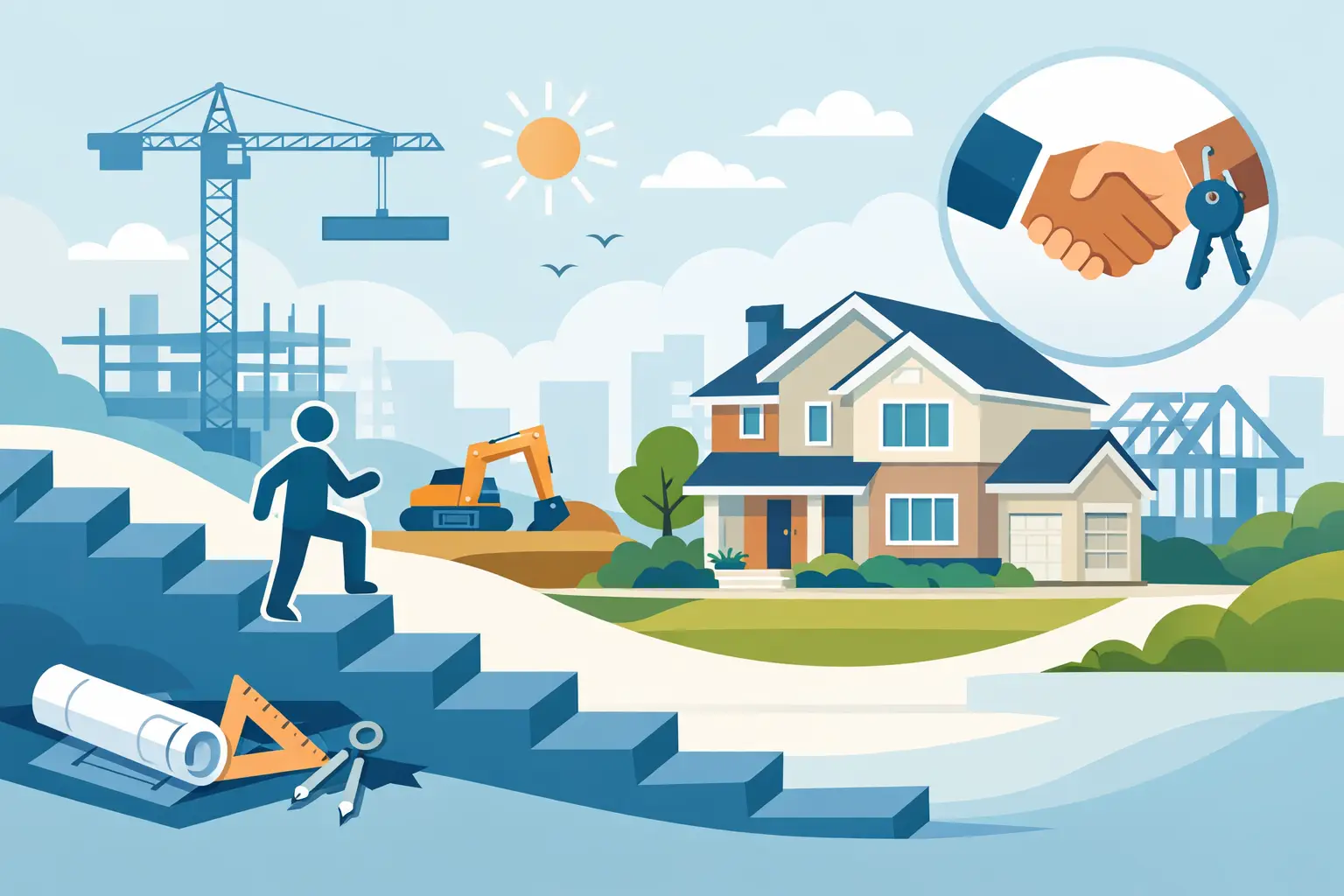
Building a home from the ground up is exciting right up until the moment you realize how many decisions affect cost, timing, and long-term value. The right steps for new construction home planning can keep the process organized and far less stressful, especially when you understand what should happen before the first shovel hits the ground.
A new home is not just a design project. It is a sequence of financial, regulatory, technical, and personal decisions that need to line up. When one stage gets rushed, the next stage usually pays for it in delays, change orders, or compromises you did not want to make.
Start with goals before drawings
Before plans are drafted, get clear on how the home needs to live. Square footage matters, but daily routines matter more. A family with young children may need sightlines from the kitchen to the living area, durable finishes, and bedrooms grouped together. Someone planning to age in place may care more about wider hallways, fewer level changes, and a main-floor suite.
This is also the time to define priorities. If budget pressure shows up later, what stays and what can flex? Ceiling height, window size, energy performance, layout efficiency, and custom millwork all carry different cost implications. Knowing your non-negotiables early helps your builder and designer protect the parts of the project that matter most.
Confirm the site and feasibility
A beautiful lot does not always equal a straightforward build. Zoning, setbacks, lot coverage, height limits, servicing, slope, access, soil conditions, and tree restrictions can all shape what is realistically possible.
This is one of the most overlooked steps for new construction home projects because buyers often fall in love with a property before checking the constraints. If the lot has drainage issues, difficult access for equipment, or utility upgrade requirements, your costs can shift quickly. A feasibility review at the beginning can save months of redesign and thousands in avoidable surprises.
If you already own the property, this stage is still critical. It is far better to learn early that your dream footprint needs adjustments than to discover it halfway through permit review.
Build the right project team
A new construction home runs best when roles are clear from day one. Depending on the scope, your team may include a designer or architect, structural engineer, surveyor, energy consultant, and general contractor.
The most effective process is collaborative, not fragmented. When the contractor is brought in early, budgeting, constructability, scheduling, and material lead times can be discussed while plans are still evolving. That means fewer design decisions made in a vacuum and fewer expensive revisions later.
This is where experience matters. A builder should not just price drawings. They should help identify risk, explain trade-offs, and flag details that may look good on paper but create cost or maintenance issues in real life.
Set a realistic budget with contingencies
Many homeowners start with a target number and hope the design fits inside it. A better approach is to match the design ambition to a verified construction budget from the start.
Your budget should include more than the build itself. Soft costs such as design fees, engineering, permits, utility connections, surveys, insurance, financing, and site preparation can add up fast. You also need a contingency. Even well-managed projects can encounter changes tied to site conditions, product availability, or owner selections.
A contingency is not a sign that something is wrong. It is a sign that the project is being managed responsibly. For many homeowners, the real comfort comes from understanding where the money is going and what decisions carry the biggest financial impact.
Move into design with pricing in mind
Once goals, site conditions, and budget are aligned, the design can move forward with much more confidence. This stage usually begins with concept plans, then develops into more detailed architectural and engineering drawings.
Good design balances aesthetics with buildability. Large spans, custom glazing, complicated rooflines, and specialty finishes may all be worth it, but they should be chosen knowingly. Every project involves trade-offs. A simpler structure can free up budget for better windows, higher-quality flooring, or improved insulation. In many cases, that creates more lasting value than spending heavily on visual complexity alone.
Selections should start earlier than many people expect. Windows, doors, plumbing fixtures, flooring, appliances, and lighting all affect both pricing and scheduling. If you wait too long to make those calls, procurement delays can push the build timeline.
Plan permits and approvals carefully
Permits are not a formality. They are a major project stage with real timing implications. Depending on the municipality and scope, approvals may include building permits, demolition permits, zoning reviews, tree permits, engineering approvals, utility coordination, and other jurisdiction-specific requirements.
This step often tests patience because much of it happens behind the scenes. Still, careful submission preparation matters. Incomplete or inconsistent drawings can trigger review comments, which creates a cycle of revisions and lost time.
A well-managed permit process includes tracking submissions, responding quickly to requests, and coordinating consultants so the documentation stays consistent. Clients often feel less stress when they know someone is actively guiding this stage instead of simply waiting on it.
Prepare for pre-construction, not just construction
Once approvals are in place, the focus shifts to pre-construction planning. This is where the project gets organized for execution. Contracts are finalized, schedules are built, procurement begins, trades are booked, and site logistics are mapped out.
This stage deserves more attention than it usually gets. A home build can go off course long before framing starts if there is no clear procurement plan or if key materials have long lead times. Cabinets, custom windows, specialty fixtures, and some finish materials may need to be ordered months in advance.
Pre-construction is also where expectations should be set around communication. Homeowners should know how updates will be shared, when decisions are required, and how changes to scope will be priced and documented. Clarity here protects the working relationship later.
Understand the construction sequence
The build itself typically follows a predictable order, even though timing varies by project. Site preparation and excavation come first, followed by foundations, framing, roofing, exterior enclosure, rough-ins for mechanical and electrical systems, insulation, drywall, interior finishes, and final inspections.
Each stage depends on the one before it being done properly. For example, rushing framing can create headaches for drywall, cabinetry, flooring, and trim. Waterproofing and air sealing may not be the most visible parts of the build, but they have a major effect on long-term durability and comfort.
This is why quality control should be continuous, not saved for the end. Regular site review, coordination between trades, and prompt problem-solving help avoid the kind of compounded issues that are expensive to fix later.
Expect decisions during the build
Even with excellent planning, some decisions will arise during construction. You may adjust a lighting layout after seeing room proportions in person. You may discover that a selected tile is backordered and need an alternative. You may also choose to make no changes at all, which is sometimes the smartest move for schedule and budget.
The key is having a clear change process. Any revision should be explained in terms of cost, timing, and downstream impact before work proceeds. That protects both the client and the builder. Transparent communication is not just nice to have in this phase. It is what keeps trust intact when the project gets busy.
For many clients, this is where a hands-on contractor makes the biggest difference. A team that communicates early, documents changes, and stays accountable can turn a complex process into one that feels manageable.
Finish strong with inspections, handover, and support
The final stage is more than a walkthrough. It includes final inspections, deficiency correction, systems review, documentation, and handover. Homeowners should understand how major systems operate, what maintenance is recommended, and what warranty coverage applies.
A proper handover is part of the build quality, not an afterthought. If a client receives keys without clarity on equipment, finishes, touch-ups, or next steps, the project does not feel complete. The best builders stay available after occupancy to address final details and support the transition into the new home.
That long view matters. A house is a major investment, but it is also where daily life happens. At Rely Construction, that is why the process is treated with as much care as the final product.
Why the order matters
People often ask whether these steps can overlap, and sometimes they can. Design and budgeting should inform each other. Procurement can begin before every finish is selected. Some approvals may run in parallel. But the overall sequence still matters because each phase sets up the next one.
When homeowners skip ahead too fast, they usually lose either money, time, or confidence in the process. When the project is approached in the right order, the experience becomes much more predictable. Not perfect, because construction rarely is, but grounded, transparent, and easier to navigate.
If you are planning a new home, give yourself the advantage of a process that makes room for good decisions. The build will move faster when the early thinking is done well, and you will feel the difference long after move-in day.