A new home rarely feels complicated when you picture the finished result. The complexity shows up in the path it takes to get there. If you are asking what are the stages of new home construction, the short answer is that the process moves from planning to approvals, then into site work, structure, systems, finishes, and final handover. The longer answer matters more, because every stage affects your timeline, budget, and peace of mind.
For most homeowners, the biggest source of stress is not the building itself. It is uncertainty. Knowing what happens next, what decisions are needed from you, and where delays can happen makes the experience far easier to manage. A well-run project should feel organized, transparent, and carefully guided from start to finish.
What are the stages of new home construction?
While every build has its own details, most new homes follow the same core sequence. The stages are planning and feasibility, design, budgeting, permitting, site preparation, foundation work, framing, mechanical rough-ins, insulation and drywall, interior and exterior finishes, final inspections, and handover. Some of these overlap, and some take longer depending on the property, municipality, and design complexity.
That is why a custom home in an established neighborhood can move differently than a laneway home or an infill project on a tight urban lot. Access, utility connections, zoning rules, and neighboring structures all affect the order and pace of work.
Stage 1: Feasibility, goals, and early planning
Every successful home starts before any drawings are finalized. This first stage is about understanding the property, your goals, and the practical limits of budget, zoning, and buildability. Homeowners often come in with a vision, but the early work is what turns that vision into something realistic.
At this point, the contractor and design team look at the lot, setbacks, site conditions, servicing, and the overall scope of the home. They also start asking the questions that protect you later. How large can the home be? What level of finish are you expecting? Are there site access challenges? Are there grading or drainage issues that may increase cost?
This stage can feel slower than clients expect, but it saves time later. It is much easier to adjust the project on paper than after permits are issued or construction has begun.
Stage 2: Design development and construction drawings
Once the project direction is clear, the design moves forward. Floor plans, exterior elevations, structural requirements, and material decisions begin to take shape. Depending on the project, this stage may involve an architect, designer, engineer, and contractor working together.
This is also where homeowners start making choices that affect both budget and construction timing. Window sizes, rooflines, ceiling details, kitchen layout, and mechanical requirements are not just aesthetic decisions. They can change structural needs, labor, lead times, and permit review.
The best design stage balances creativity with buildability. A home can look beautiful on paper and still create unnecessary cost or construction complications if details are not coordinated properly.
Stage 3: Budgeting and pre-construction coordination
Before the build starts, the scope needs to be priced carefully. This stage is where allowances, selections, labor, and procurement planning come together. It is also where experienced project management makes a major difference.
A clear budget should reflect the actual intent of the project, not just a rough guess designed to get work started. If the estimate does not match the quality level you expect, the gap usually shows up later in the form of change orders or compromised finishes.
Pre-construction coordination also includes scheduling, identifying long-lead items, confirming trade availability, and aligning the construction plan with permit timing. Cabinets, windows, custom doors, and specialty fixtures can affect the schedule long before they are installed.
Stage 4: Permits and approvals
Permitting is the stage many homeowners underestimate. Before major construction can begin, the project usually needs municipal approval, and that process can involve architectural review, zoning compliance, structural review, and utility-related requirements.
The timeline here depends on the municipality and the complexity of the project. Straightforward builds may move through approvals more smoothly, while custom homes with variances or unusual site conditions can take longer. This is one of the areas where patience matters, because rushing incomplete permit submissions often creates more delay, not less.
A good contractor helps coordinate this process so the project is not just waiting passively. During permit review, there is often useful work happening in parallel, such as refining selections, confirming trade scopes, and preparing for mobilization.
Stage 5: Site preparation and excavation
Once approvals are in place, the physical work begins. The site is prepared, access is organized, and excavation starts. Depending on the property, this may include demolition of an existing structure, tree protection measures, temporary fencing, grading preparation, and utility coordination.
Excavation sets the tone for the build. Soil conditions, groundwater, and weather can all affect how smoothly this stage moves. On paper, excavation may seem simple. In reality, this is where hidden site conditions sometimes appear and require adjustments.
That does not always mean major problems, but it does mean the team needs to respond quickly and communicate clearly when conditions change.
Stage 6: Foundation and structural base
After excavation, the foundation is formed and poured. This may include footings, foundation walls, waterproofing, drainage systems, underslab work, and backfilling once the structure is ready.
This stage matters because everything above depends on what is below. A properly built foundation supports structural performance, moisture protection, and long-term durability. It is not the most visible part of the home, but it is one of the most important.
Inspections are typically required at key points here. The exact sequence depends on local code requirements, but the goal is the same: confirm that the work is safe, compliant, and ready for the next stage.
Stage 7: Framing the home
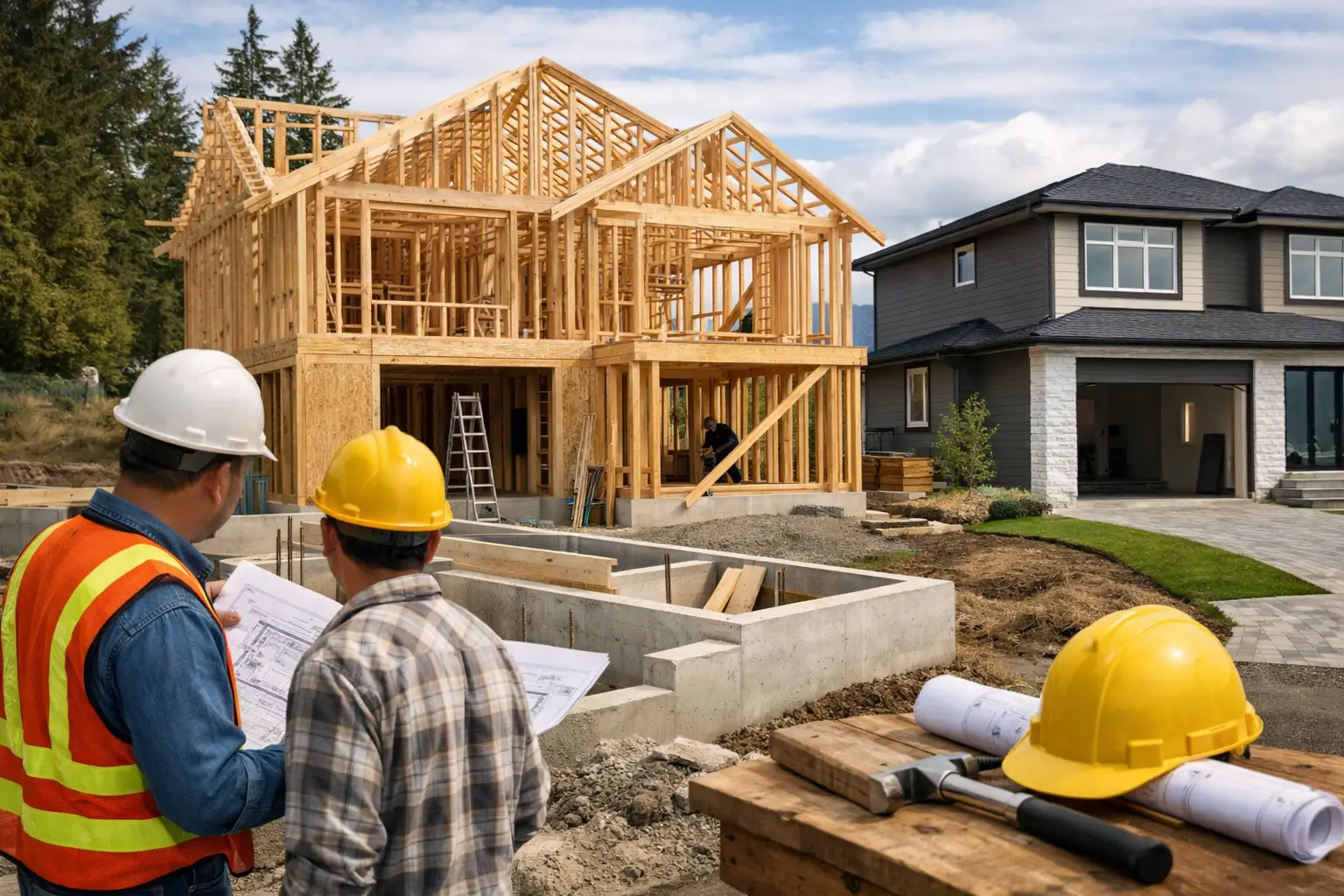
Framing is the point where the house starts to look real. Walls go up, roof structures take shape, and the layout becomes visible in three dimensions. For many homeowners, this is the first stage that feels emotionally significant because you can finally walk through the rooms and understand the scale.
It is also a stage where precision matters. Framing affects drywall lines, cabinetry fit, door operation, flooring transitions, and finish quality. Small errors here can echo through the rest of the project.
Once framing is complete, the building is typically sheathed and prepared for the next layers of weather protection and systems installation.
Stage 8: Roofing, windows, and rough-ins
After the structure is framed, the home is dried in with roofing, windows, doors, and exterior protection. Around the same time, the major rough-ins begin. This includes plumbing, electrical, HVAC, and sometimes low-voltage or specialty systems.
This stage requires strong coordination because several trades are working in sequence within the same spaces. Mechanical systems must fit the framing, support the design intent, and comply with code. If the plans were not coordinated properly earlier, this is often where conflicts show up.
Inspections usually happen again before walls are closed. It can feel like progress slows here, but this stage is about getting the hidden systems right. Once drywall is installed, corrections become far more disruptive.
Stage 9: Insulation, drywall, and interior surfaces
With rough-ins approved, insulation is installed and the interior starts to close in. Drywall follows, then taping, sanding, and surface preparation. The house begins to shift from a construction site into a finished interior.
This is often a transitional point in the schedule. The project may look close to done, but there is still a significant amount of finish work ahead. Interior doors, trim, cabinetry, tile, flooring, painting, fixtures, and millwork all need to be completed in the right sequence.
Homeowners sometimes become most impatient here because the visible changes are smaller, even though the work is highly detailed and labor-intensive.
Stage 10: Finishes, fixtures, and final details
The finish stage is where craftsmanship becomes obvious. Cabinets are installed, tile is laid, flooring goes in, lighting and plumbing fixtures are mounted, and interior trim is completed. Exterior elements such as siding, masonry, painting, decks, and final grading may also continue during this phase depending on weather and scheduling.
This is the stage where early product selections matter most. If finish materials arrive late or are changed at the last minute, the schedule can tighten quickly. Custom pieces and back-ordered items are common reasons final completion dates shift.
The goal is not just to get the house finished, but to get it finished well. Attention to detail makes the difference between a home that looks acceptable on move-in day and one that feels carefully built.
Stage 11: Final inspections, walkthrough, and handover
Before occupancy, the home goes through final inspections and quality checks. Deficiencies are identified, touch-ups are completed, and the systems are reviewed. This is also when the homeowner typically does a walkthrough to understand the home, ask questions, and review any remaining items.
Handover should feel clear, not rushed. You should receive documentation, warranty information, and guidance on how to operate and maintain the home properly. Even with an excellent build, minor post-completion adjustments can happen as the house settles and systems are used in real conditions.
That is one reason a relationship-driven contractor matters. The project does not end the moment the keys are handed over.
What affects the timeline between stages?
Even when homeowners understand what are the stages of new home construction, they still want to know how long each one takes. The honest answer is that it depends on design complexity, permit timelines, weather, site access, inspections, and product lead times.
A simple home with coordinated planning may move efficiently. A highly customized home on a restricted site may require more sequencing, more review, and more patience. Neither is wrong. What matters is having a realistic schedule, clear communication, and a team that manages issues before they grow.
Building a new home is a major investment, but it should not feel like guesswork. When each stage is planned carefully and communicated clearly, the process becomes much easier to trust, and that trust is what lets you focus on the part that matters most – creating a home that truly fits your life.